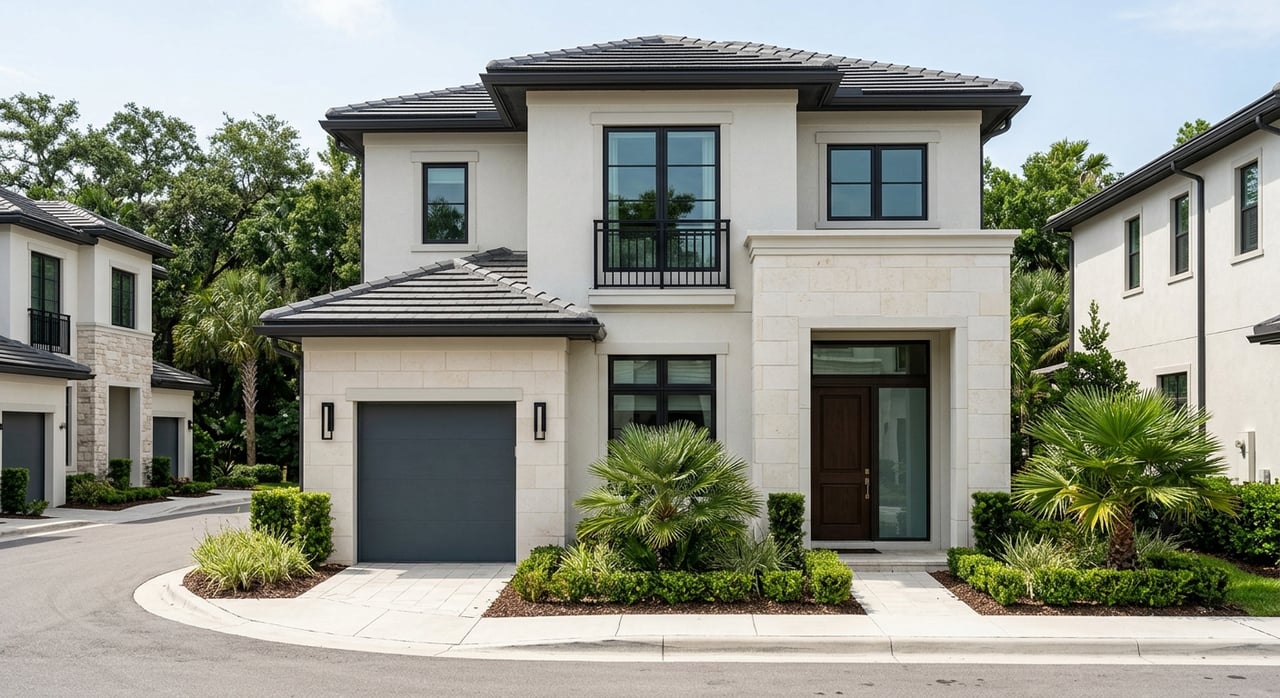
If you are eyeing a new build in Horizon West as an investment, the headline price is only part of the story. This is one of Central Florida’s most active growth areas, which creates opportunity, but it also means your returns can be shaped by fees, zoning, product type, and your exit plan just as much as location alone. If you want to buy with more clarity and less guesswork, this guide will help you evaluate what actually matters before you commit. Let’s dive in.
Why Horizon West Gets Investor Attention
Horizon West is not just one neighborhood. Orange County describes it as a large special planning area built around five mixed-use villages and a town center, with about 20,704 gross acres, 11,850 developable acres, and a long-range vision of 42,000 residential units.
For you as an investor, that scale matters. It means Horizon West is a phased growth market with multiple communities, product types, and future release cycles, not a one-off subdivision where supply is already fixed.
The area also has a strong demographic profile. Census data for 2020 shows 58,101 residents, a median household income of $123,586, a 69.0% owner-occupied rate, a median owner-occupied home value of $498,700, and a median gross rent of $2,236.
That mix points to an area with both owner-occupant demand and long-term rental demand. It also suggests that resale appeal may be tied to practical livability, not just new-construction shine.
What the Current Market Says
Recent market data shows real activity, but not a market where weak numbers get hidden. Realtor.com reported roughly 796 to 852 active listings in Horizon West, median list prices around $599,000 to $609,900, median days on market of 54 to 61 days, and a sale-to-list ratio of 98%.
That is useful context for your underwriting. Homes are moving, but buyers are price aware, and the market appears balanced rather than overheated.
For investors, this usually means you should not rely on aggressive appreciation alone. Your purchase price, monthly carry, and resale positioning all need to work from day one.
Start With the Right Rent Strategy
One of the biggest mistakes investors make in Horizon West is assuming any new build near the Disney corridor can work as a short-term rental. In Horizon West, that assumption can lead you in the wrong direction.
Orange County says short-term rentals of 179 days or less are allowed only in certain commercial or industrial districts or in planned developments where short-term rental is expressly allowed. The county also states that vacation rentals are not allowed in most residential areas, and single-family transient rental of less than 30 days is permitted only in the R-3 district.
That is why long-term leasing should be your default assumption for most Horizon West new builds unless zoning and community documents clearly say otherwise. You should verify the specific parcel, planned development rules, and deed restrictions instead of relying on a broad Orlando-area rental narrative.
Why community rules matter
In a master-planned area like Horizon West, two nearby communities can have very different ownership and leasing rules. The neighborhood name alone does not tell you enough.
Before you buy, you should confirm:
- Zoning for the specific parcel
- Lease term rules in the governing documents
- Whether the community has HOA restrictions that affect rentals
- Whether a CDD applies to the property
- Whether any future amendments by the developer could affect ownership rules during early phases
Match the Property Type to the Strategy
Not every new build in Horizon West serves the same buyer or renter. A townhome, a smaller single-family home, and a larger move-up home can each perform differently based on purchase price, maintenance, monthly fees, and who the likely end user will be.
That is why product fit matters as much as the community name. If your plan is a long-term hold, you want a property type that supports stable demand and manageable carrying costs.
Townhomes
Townhomes can offer a lower entry point and less maintenance responsibility than detached homes. That can help if you want a more approachable basis and broader resale appeal.
For example, Toll Brothers’ Westhaven at Ovation offers townhomes from 1,760 to 2,593 square feet starting in the upper $400,000s. RockWell’s Harvest at Ovation includes a 4-bedroom, 3-bath townhome at 2,163 square feet priced at $550,000.
The tradeoff is that townhomes usually come with HOA dues and shared ownership structure. That means you need to study the budget, reserves, rental rules, and what the association actually covers.
Single-family homes
Single-family homes often offer more space and a higher upside ceiling on resale, but they usually come with a higher purchase price and more owner responsibility. In practical terms, that can mean a stronger need for cash flow support and a longer hold period.
Pulte’s Silverleaf Oaks starts at $434,990 with homes ranging from 1,553 to 3,643 square feet and markets low HOA and no CDD. That kind of fee structure can materially change your monthly carry compared with communities that layer HOA dues and CDD assessments together.
A simple comparison
| Property type | Potential advantage | Key tradeoff |
|---|---|---|
| Townhome | Lower entry price, lighter exterior maintenance | HOA dues and attached-home restrictions |
| Compact single-family | Broader end-user appeal with more privacy | Higher maintenance responsibility |
| Larger single-family | More space and stronger move-up resale profile | Higher basis and typically higher carry |
Watch Holding Costs Closely
A deal that looks fine at the purchase price can still disappoint if the monthly carry is heavier than expected. In Horizon West, this is especially important because new-build communities can layer costs in ways that are easy to overlook.
Orange County property taxes are based on taxable value multiplied by the applicable millage rate. The county tax collector notes that non-ad valorem assessments, such as streetlights, sewage, and road improvements, may also appear separately from ad valorem property taxes.
For you, that means these charges belong in your underwriting from the start. They are not side notes. They are part of the real cost of ownership.
HOA review is not optional
Florida Chapter 720 governs HOAs and makes clear that assessments can become liens if unpaid. The law also requires a disclosure summary before contract execution and requires associations to maintain official records, budgets, and financial reporting.
That gives you a framework for due diligence, but you still need to do the work. In a new-build investment, the HOA review should be a core step, not a box to check at the end.
You should review:
- HOA budget
- Reserve information
- Current assessment structure
- Lease restrictions
- Official disclosure summary
- Estoppel information when applicable
Understand the CDD question
A CDD is not the same as an HOA. Under Florida law, CDD charges may be imposed in addition to county and other local taxes and assessments.
This is one reason one Horizon West new build can underwrite very differently from another, even if the homes seem similar on the surface. A community with low HOA and no CDD may perform very differently from one with both layers of recurring charges.
Infrastructure Can Help or Hurt Timing
Horizon West’s long-term growth story is supported by public investment, but timing still matters. New roads, parks, and town center improvements can strengthen livability and resale appeal over time, yet construction periods can create short-term friction.
Orange County opened Phase 1A of Horizon West Regional Park in February 2026 following a $15.6 million investment, and Phase 1B is planned. The county is also advancing the Flemings Road Extension, the New Independence Parkway extension, and the widening of C.R. 545 in the Town Center area.
For a long-term investor, those projects may support future value. For a short hold, they may add noise, inconvenience, or uncertainty that should be reflected in your assumptions.
Build Your Exit Strategy Before You Buy
A smart Horizon West investment starts with the exit in mind. In a market where homes are selling at about 98% of asking and inventory remains active, your future buyer will likely compare your property carefully against both resale competition and new-construction alternatives.
That means your exit is not just about waiting for appreciation. It is about owning the right product, in the right fee structure, with a realistic basis.
Questions to ask before you buy
Use these checkpoints to pressure-test a new build investment:
- Is this property better suited for long-term rental or resale to an owner-occupant?
- Does the purchase price leave room for balanced-market resale conditions?
- Are HOA dues and any CDD charges reasonable for the product type?
- Do zoning and community documents clearly support your intended use?
- Will road work or nearby construction affect the timing of your hold?
- Is the property type aligned with likely demand in that specific community?
The due diligence package that matters
Because Horizon West has layered village, planned development, zoning, and association rules, you should verify each property community by community. A disciplined review should include:
- Declaration and governing documents
- HOA budget and reserves
- Estoppel
- Lease term rules
- CDD assessment schedule, if applicable
- Zoning confirmation for the specific parcel
- Nearby road and amenity pipeline
That level of review helps you avoid buying based on a marketing story instead of a sound investment case.
The Bottom Line on Horizon West New Builds
Horizon West can be a compelling place to invest in new construction, but it rewards discipline. The area has scale, income strength, active inventory, and an expanding amenity base, yet those positives do not replace careful underwriting.
If you are evaluating a new build here, focus on the factors that most directly shape performance: rent strategy, zoning, HOA and CDD structure, property type, hold period, and exit path. When you get those pieces right, you put yourself in a much better position to buy with confidence and protect long-term value.
If you want help comparing communities, reviewing fee structures, or pressure-testing a Horizon West new build before you move forward, connect with the Gordy Singh & Nick Lally Team.
FAQs
What makes Horizon West different from a typical subdivision for investors?
- Horizon West is a large Orange County special planning area with multiple villages, mixed-use development, phased releases, and different community rules, so you need to evaluate each property and community individually.
Can you use a new build in Horizon West as a short-term rental?
- In most cases, you should assume a long-term rental strategy unless zoning and community documents clearly allow shorter rental use, because Orange County says vacation rentals are not allowed in most residential areas.
Are HOA fees in Horizon West enough to evaluate monthly carrying costs?
- No. You should also review property taxes, non-ad valorem assessments, and any CDD charges, because a new build may carry more than one layer of recurring costs.
Are townhomes or single-family homes better investments in Horizon West?
- It depends on your budget, hold period, and exit strategy, but townhomes often offer a lower entry price and lighter maintenance, while single-family homes may offer more space and a higher resale ceiling with higher carrying costs.
What documents should you review before buying a Horizon West investment property?
- You should review the declaration, HOA budget and reserves, estoppel, lease rules, any CDD assessment schedule, zoning confirmation for the parcel, and nearby infrastructure or amenity plans that could affect your hold period or resale appeal.
How should you think about resale risk in Horizon West?
- With active inventory, a balanced market, and homes selling near 98% of asking, resale risk comes down to basis, fee load, condition, and choosing a product type that matches likely buyer demand in that specific community.